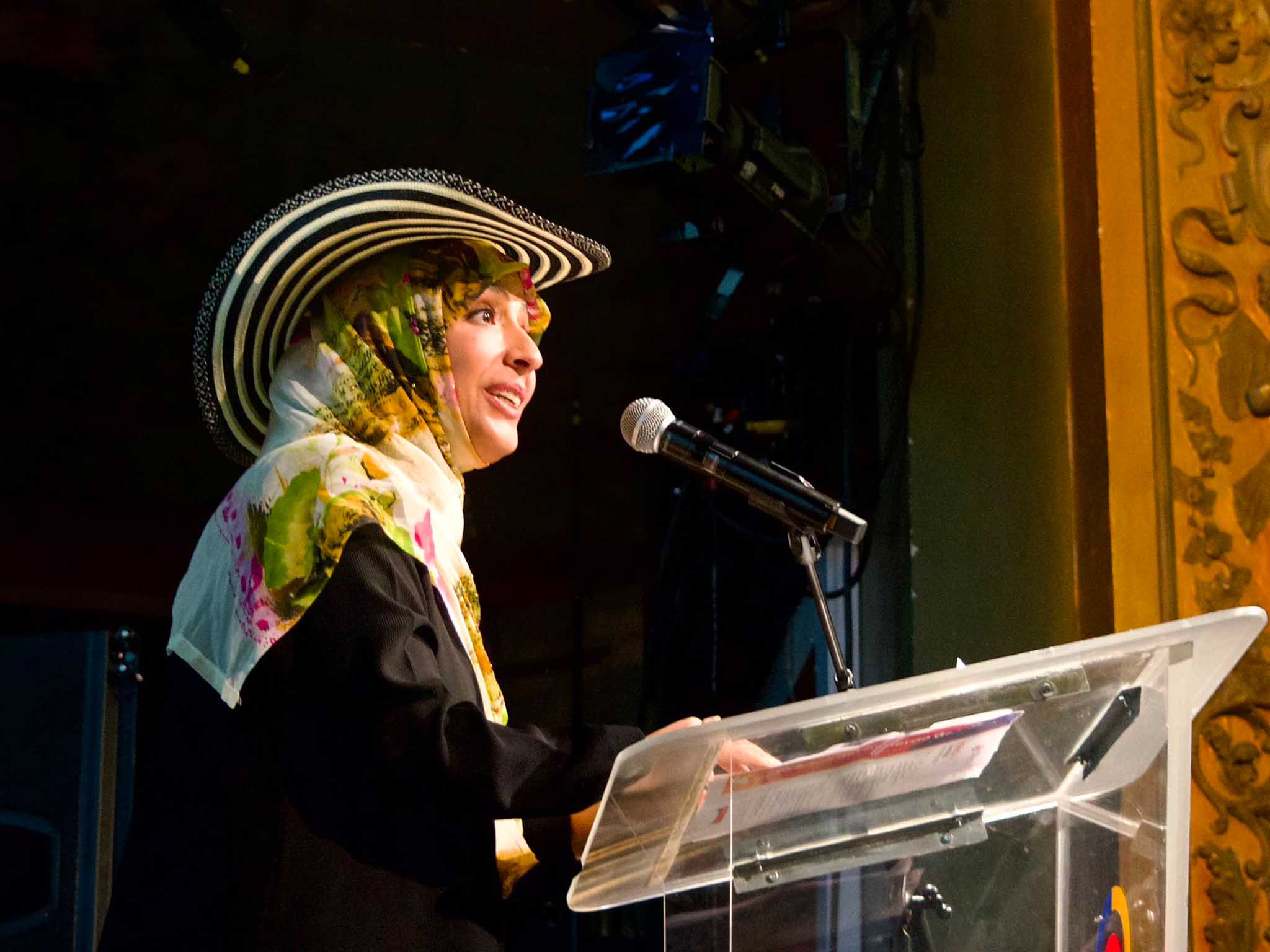
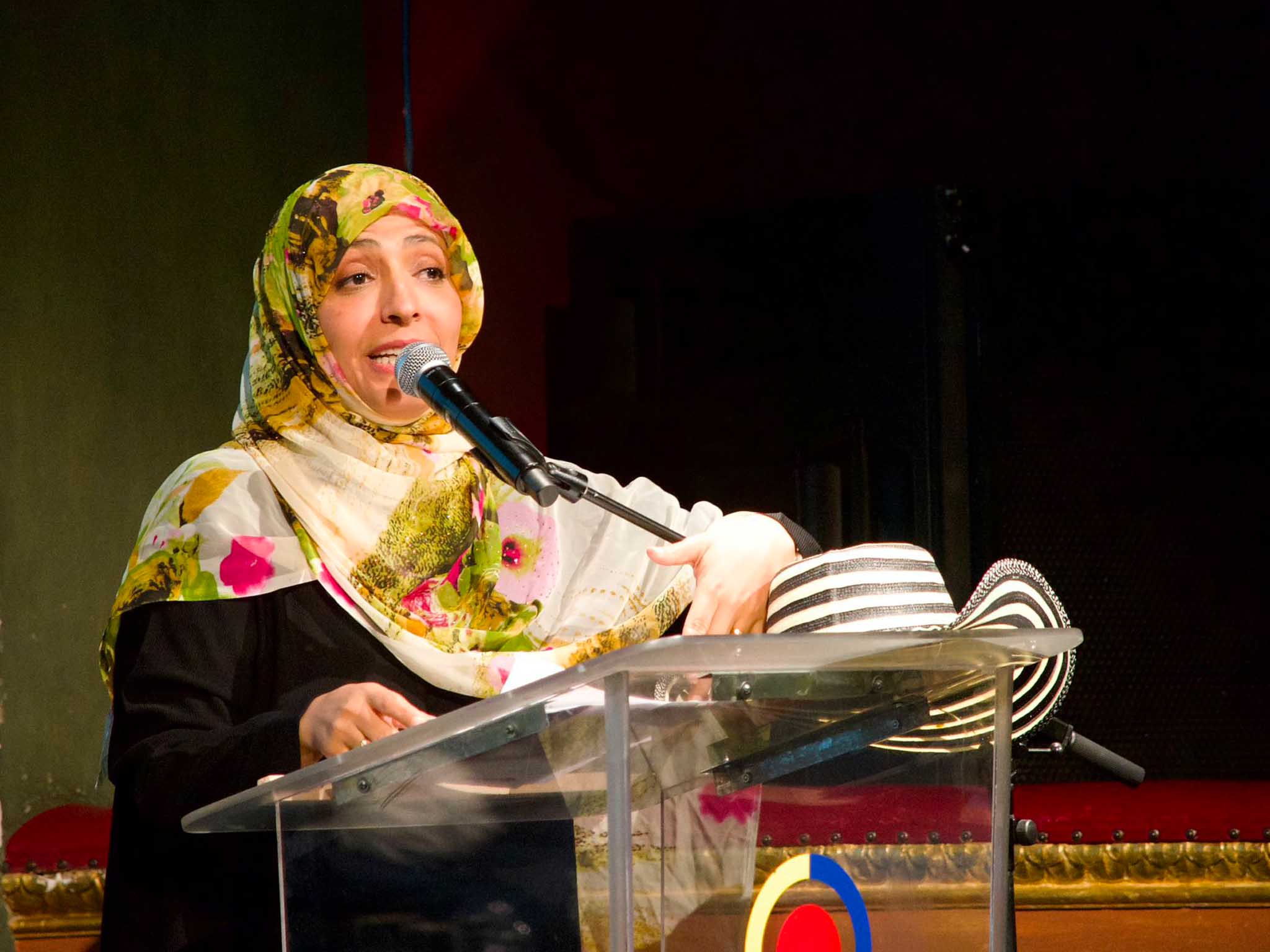
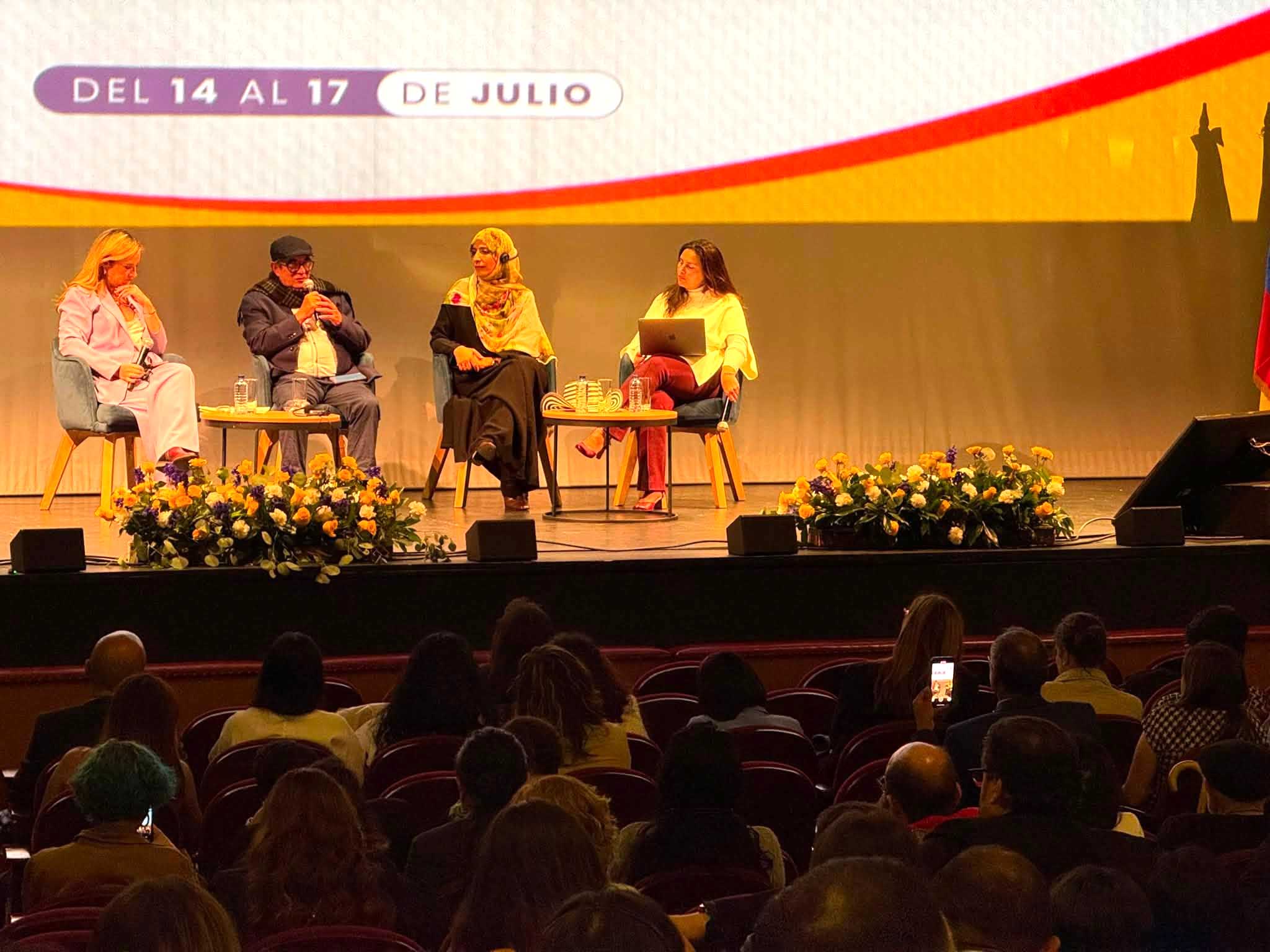
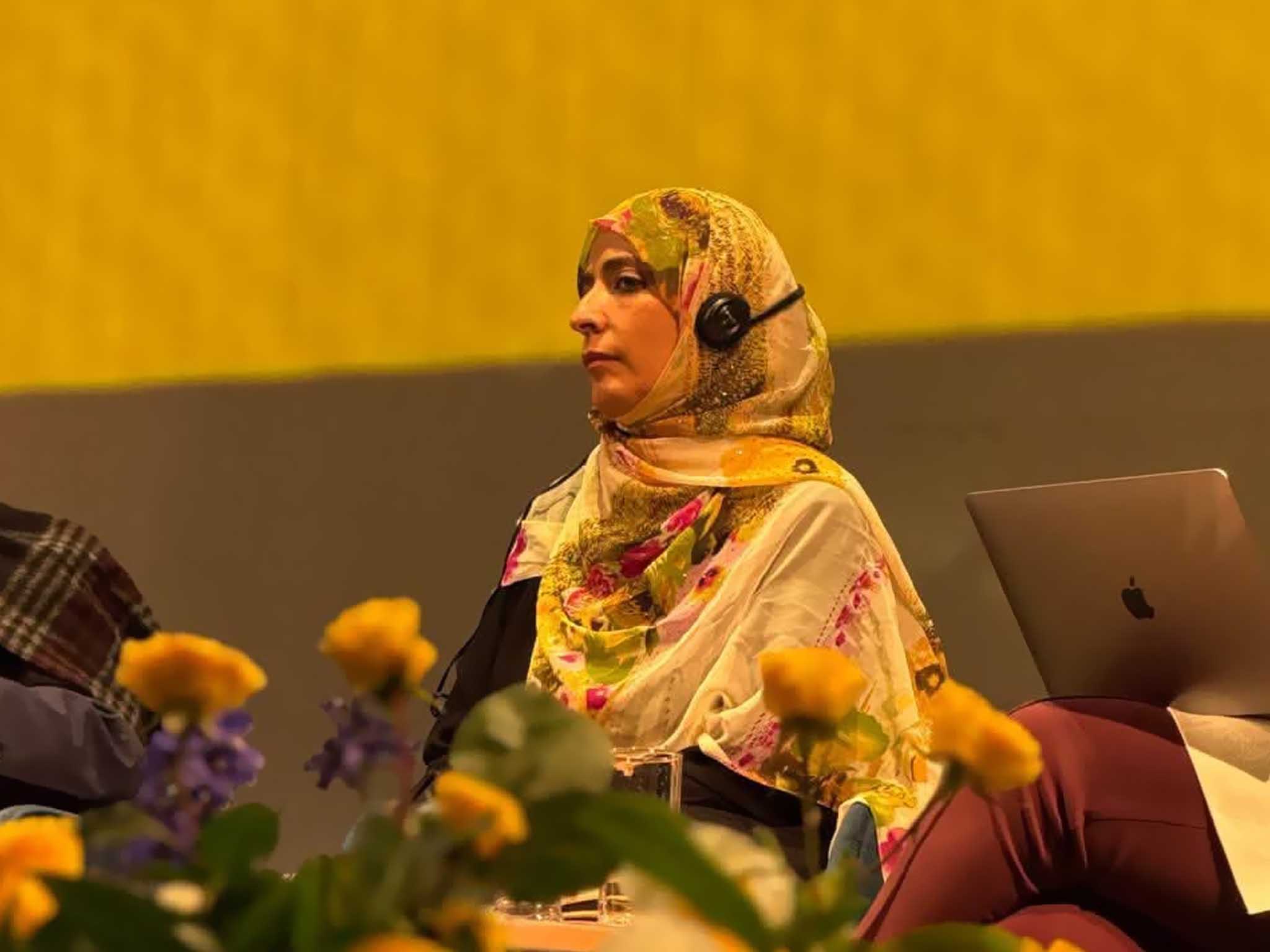
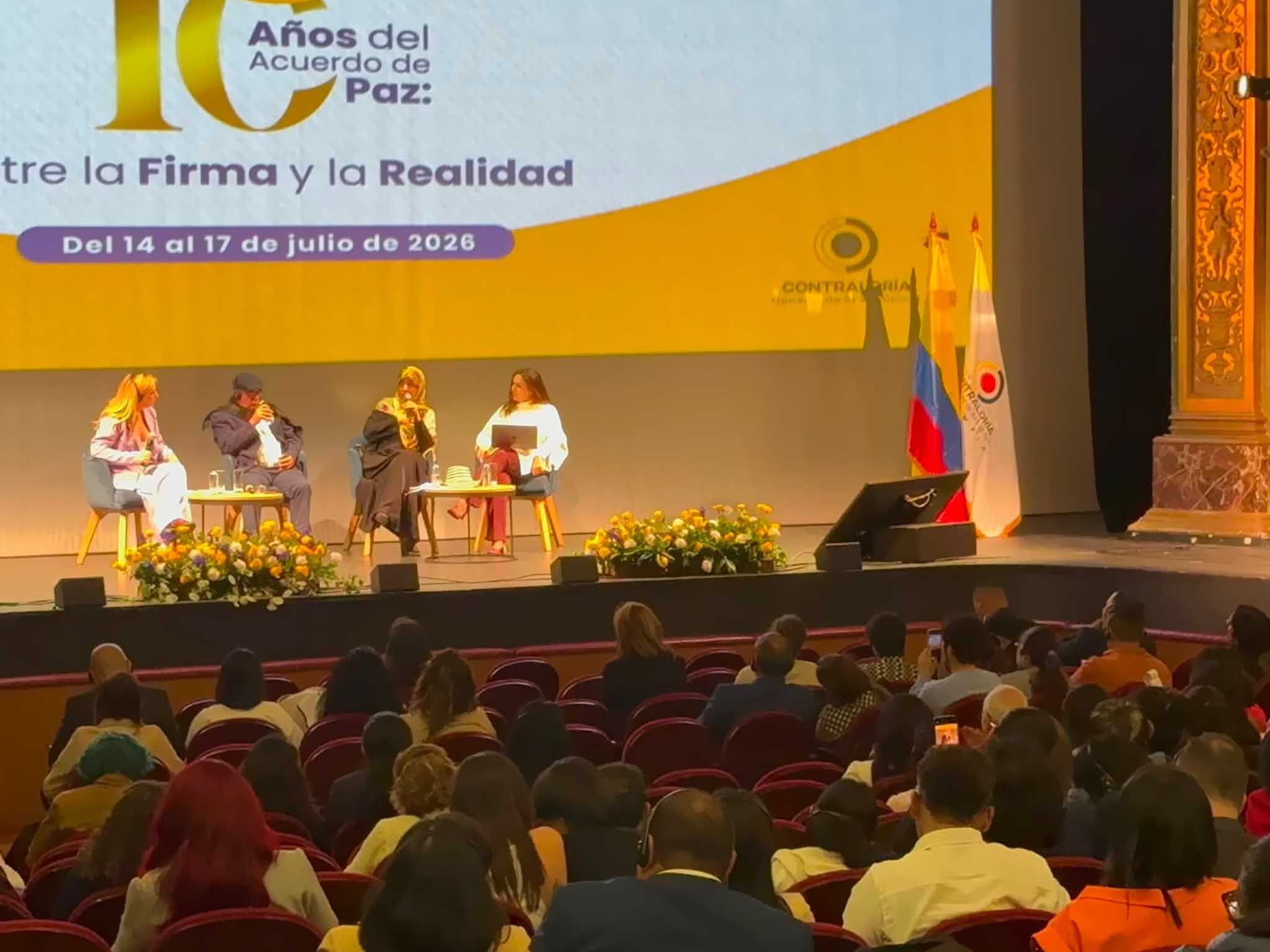
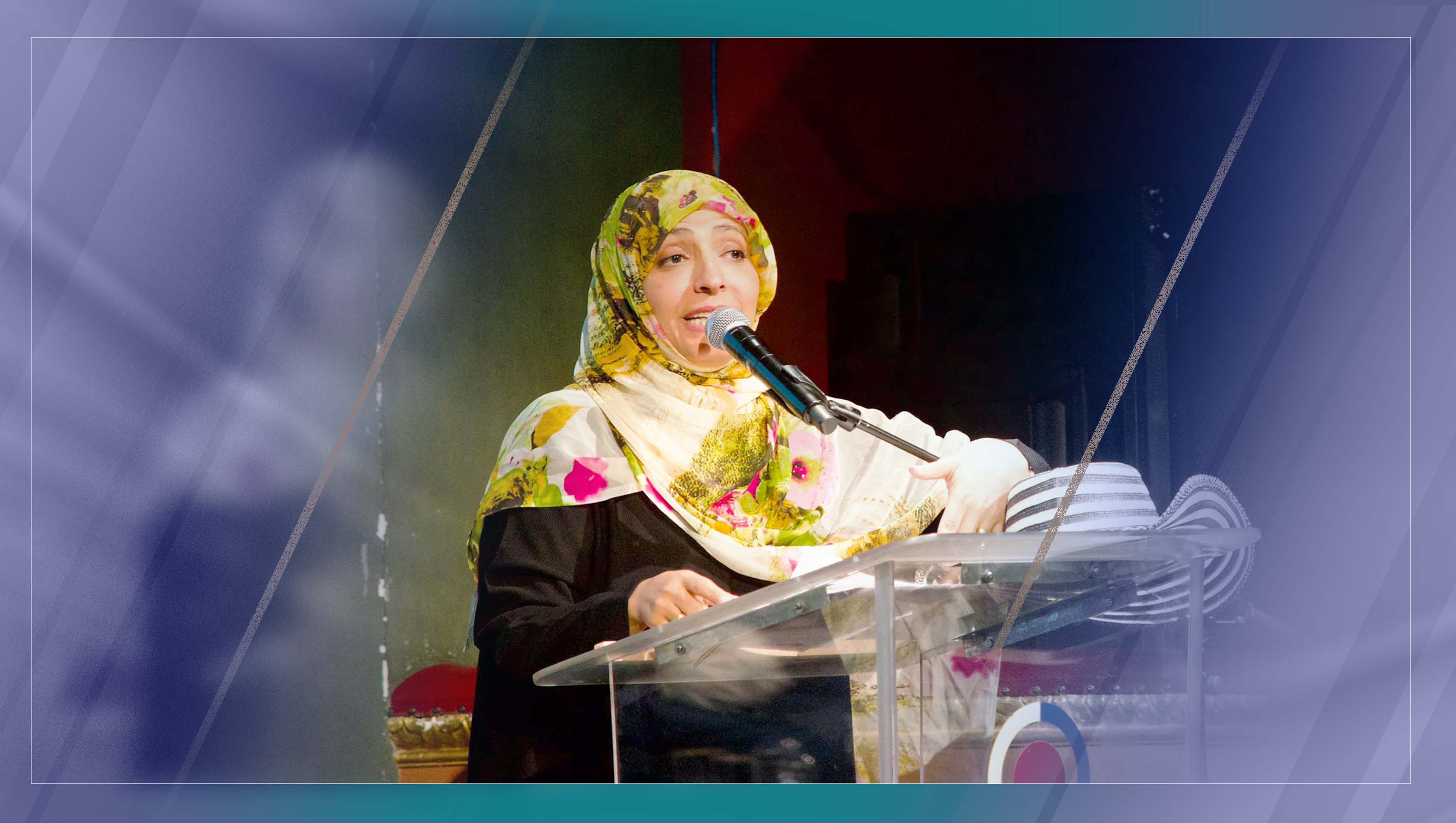
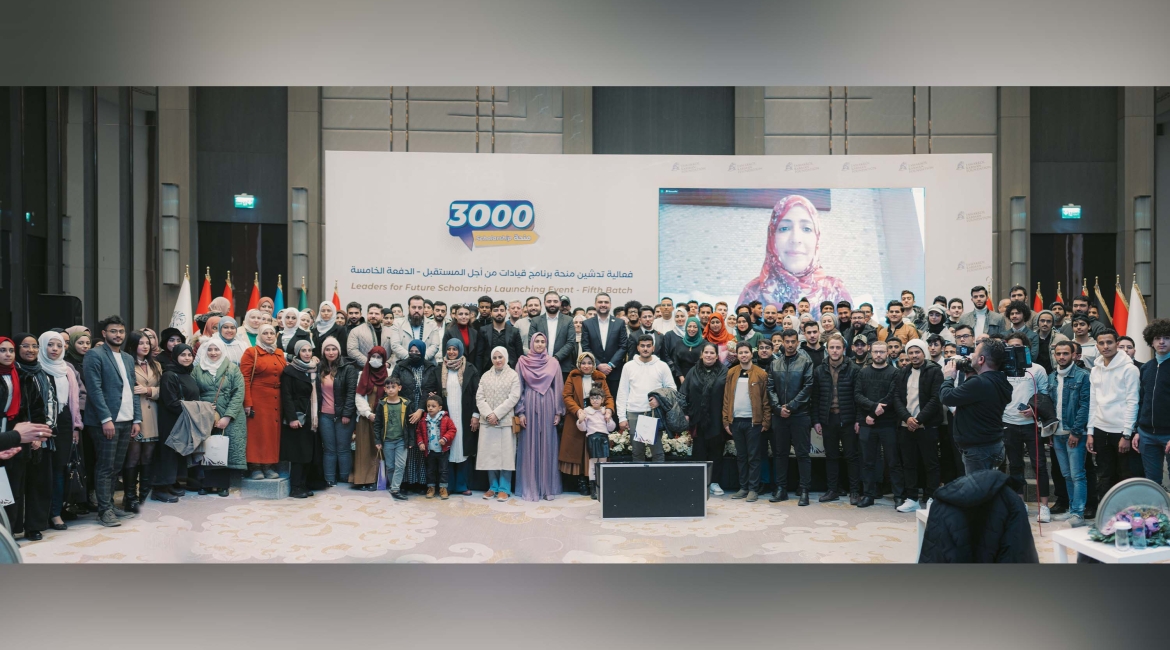
Bogotá, Colombia — Nobel Peace Prize laureate and human rights advocate Tawakkol Karman said lasting peace cannot be judged simply by the signing of political agreements or the cessation of armed conflict, but by its ability to improve the daily lives of ordinary people.
During an address reflecting on the tenth anniversary of Colombia’s Final Peace Agreement — signed in November 2016 to end decades of conflict with the Revolutionary Armed Forces of Colombia (FARC) — Tawakkol Karman underscored both the achievements and the unfinished work of peacebuilding. Her remarks highlighted the accord as a landmark moment that transformed the country’s modern history.
Political agreements, Karman said, are only the beginning of a peace process. The real test comes afterward—through the sustained work of building effective institutions, strengthening communities, and ensuring that citizens experience the benefits of peace in their everyday lives.
Drawing on both her experience in Yemen and observations of peace efforts around the world, she argued that durable peace depends on functioning schools and courts, accessible public services, and meaningful opportunities for women and young people. Ultimately, she said, peace should be measured by whether people feel secure, have confidence in public institutions, and see justice and development reach the communities most affected by conflict.
Karman described Colombia's peace agreement as both a national achievement and an inspiring example for countries seeking to emerge from prolonged violence. She noted that the accord ended decades of armed confrontation between the state and the FARC, restored the state's exclusive authority over the legitimate use of force, and enabled thousands of former combatants to return to civilian and political life.
At the same time, she cautioned that ending a war does not by itself guarantee a lasting peace. Sustained progress, she said, requires comprehensive agrarian reform, inclusive economic development, stronger public services, poverty reduction, and continued efforts to address the structural causes of violence. In this context, she welcomed the "Total Peace" policy as an important step toward consolidating those gains.
arrives too slowly, and development fails to reach the communities that paid the highest price during conflict.
She also emphasized that civil society remains indispensable to preserving peace. Women, young people, journalists, human rights defenders, and community leaders, she said, are often the forces that sustain reconciliation and social cohesion when political priorities shift.
Concluding her address, Karman called for solidarity with causes seeking freedom and justice around the world, including the Palestinian cause. She said lasting peace requires confronting injustice, discrimination, and inequality, and stressed that peace cannot be separated from the protection of human rights and fundamental freedoms.
Here is full texts:
Bogotá, Colombia — Human rights advocate and Nobel Peace Prize laureate Tawakkol Karman delivered an address in Bogotá during events commemorating the approaching tenth anniversary of Colombia's Final Peace Agreement, signed in November 2016.
Speaking at a venue she described as "deep historical and symbolic significance," Karman called the 2016 accord "a declaration that dialogue can prevail over violence and that hope can chart a course toward a more prosperous and stable future." She added: "A treaty can be captured in a single day; but a true, lasting peace is forged through years of quiet, sustained effort, structural reform, and unwavering political will."
Karman drew on her experience in Yemen and her observation of peace processes worldwide to argue that "peace is a discipline—a daily labor of rebuilding both the citizen and the state." She said it "begins in classrooms, courtrooms, and parliaments, and it must reach the most remote villages as surely as it shapes the capitals."
She proposed measuring peace processes by concrete outcomes: "Do citizens feel safe? Are women equal partners in public life? Do young people have opportunities instead of being drawn into violence? Have development, essential services, and justice reached the communities that bore the greatest burden of war?"
Karman praised Colombia's reintegration of former FARC combatants and the dismantling of the group's armed structure as "a historic accomplishment worthy of international recognition" after more than five decades of conflict. But she cautioned that "sustainable peace requires more than silencing guns," listing needs including agrarian reform, expanded public services, poverty reduction, and stronger state presence in conflict-affected regions.
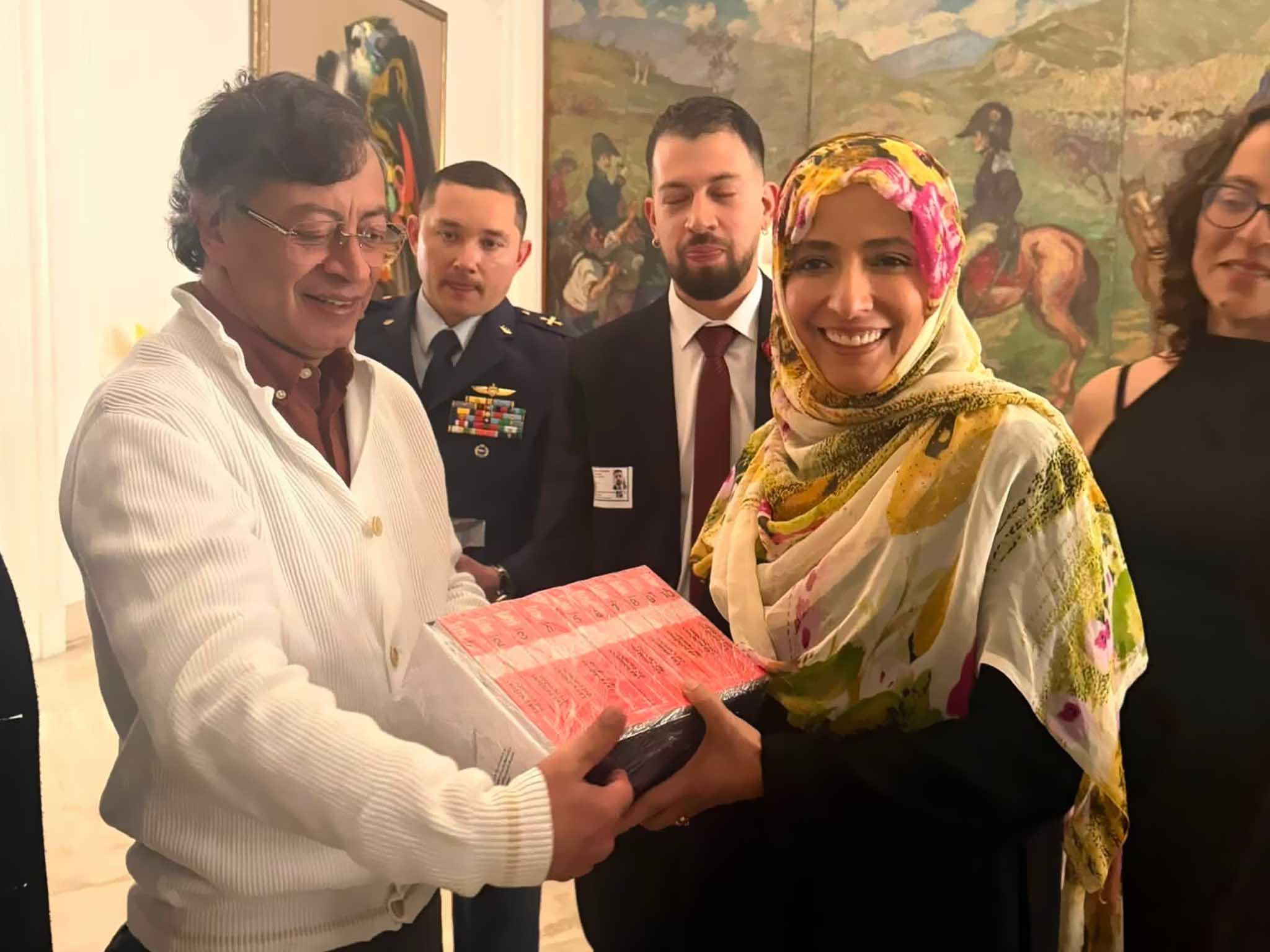
She welcomed President Gustavo Petro's "Total Peace" policy and urged future governments to continue it "regardless of electoral outcomes, because peace is a national project that transcends parties and administrations." Her remarks came three weeks before President-elect Abelardo de la Espriella is scheduled to take office on August 7.
Karman cited comparative cases including South Africa, Northern Ireland, and Rwanda to warn that "peace agreements often falter not because of their text but because of slow implementation, weak institutions, delayed justice, and the failure of development to reach the communities that paid the highest price." She said: "When citizens' trust in the state’s ability to deliver erodes, peace itself becomes fragile."
She emphasized civil society's role, describing women, young people, journalists, human rights defenders, and local leaders as "the people who sustain the spirit of peace when governments change or political will weakens."
Karman linked Colombia's experience to global conflicts, noting that "at a time when the world faces the largest number of armed conflicts since the Second World War, the Colombian experience matters beyond its borders." She cited Palestine as a place where "civilians continue to suffer the consequences of war and occupation."
She concluded: "Peace cannot be selective. Human dignity cannot be conditional. Justice must not be constrained by geography or political interest. The struggle for peace is, at its core, a struggle for freedom. The struggle for justice is a struggle for human rights. The struggle against war is also a struggle against tyranny."
The tenth anniversary of the peace agreement will be marked in November 2026.